
It has been 13 years since Food and Drug Administration (FDA) enacted the Drug Supply Chain Security Act (DSCSA) in 2013, but many pharmacists, distributors, and trading partners throughout the drug supply chain still have questions about how the law functions. To alleviate these questions and concerns, we will cover highlights of DSCSA, as well as information to help individuals understand this nuanced regulation. As the last line of defense before patients receive their medications, dispensers play a critical role in protecting patient safety.
What does DSCSA do?
DSCSA protects patients by reducing the likelihood of receiving harmful falsified drug products. DSCSA creates a more secure prescription drug supply chain that allows trading partners and officials to detect harmful or suspicious drugs through product verification and product tracing to rapidly remove such drugs if found.
How does DSCSA work?
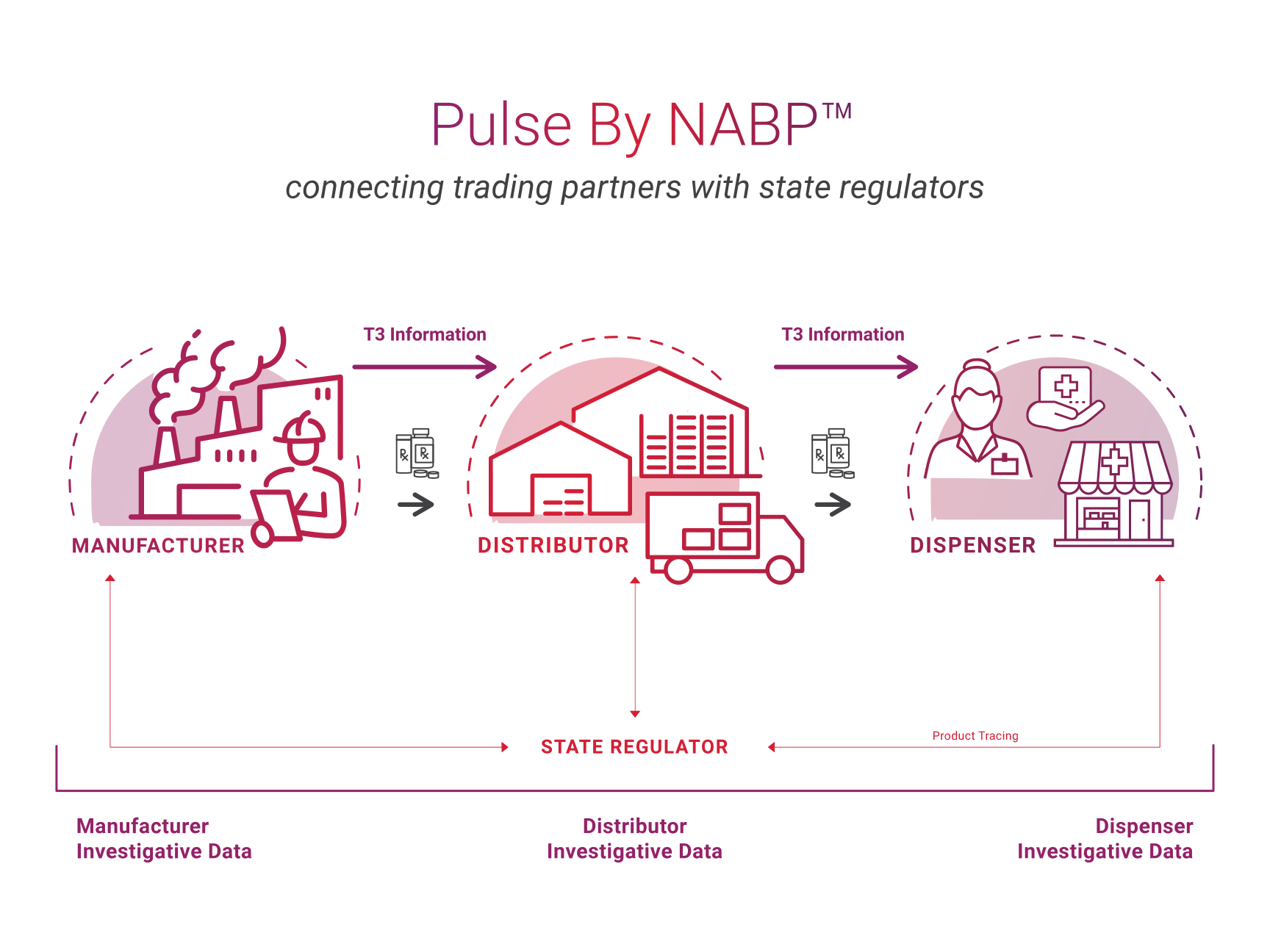
Products are traced through maintained electronic data from the manufacturer all the way down the supply chain to the dispenser level. Dispensers receive transaction information from their trading partners, report any discrepancies, and investigate any suspicious products. Then, the product is ready to be dispensed to the customer. The transaction information must be stored to support any future investigations. These steps can be broken down into 4 main requirements.
Click to enlarge

4 DSCSA Requirements for Dispensers
1. Verify your trading partners
Your trading partners are the people you do business with: the manufacturers you work with, wholesalers you order from, and the third-party logistic providers you use. By “verifying” these trading partners, you need to make sure they have the required licenses that they need to conduct business.
2. Identify and report suspect and illegitimate products
If you find – or think you may have found – a suspect or illegitimate product, you need to investigate it. FDA has created a downloadable guidance document about how to identify suspect products and notify authorities. NABP also created a dispenser education guide to aid dispensers with DSCSA compliance.
3. Accept and maintain tracing data
Your business needs to accept and keep “transaction data” for 6 years from the transaction date. Transaction data is generated each time the product changes ownership throughout the supply chain. There are 3 types of transaction data, known as the “T3s.”
| The “T3” Data | |
|---|---|
| Transaction Information | This information includes the name of the product, strength and dosage form, National Drug Code (NDC), container size, number of containers, serial number, transaction date, shipment date, name and address of the seller and buyer, and lot number, if applicable. |
| Transaction History | This is a statement including transaction information for each prior transaction of the product back to the manufacturer. Transaction History is no longer tracked. |
| Transaction Statement | This is an official statement which shows ownership of the product. |
Do not accept any product that does not include a transaction statement and serialized transaction information from the previous owner.
4. Accept only products with product identifiers
A product identifier is displayed in a standardized graphic (2D barcode) that includes:
- The product’s standardized numerical identifier (the NDC and a unique alphanumeric serial number)
- Lot number
- Expiration date
A product identifier is required on packages and homogenous cases of the product. The identifier must be affixed to the smallest individual saleable unit of the product for distribution by a manufacturer or repackager.
Use Pulse by NABP® to Enable DSCSA Compliance
With the DSCSA dispenser compliance deadline approaching in 2027, solutions like Pulse can help dispensers stay compliant by verifying trading partners, providing product verification, and more, while reducing the operational and administrative burden on staff. Pulse is an inclusive and secure digital platform that simplifies DSCSA compliance for drug supply chain trading partners. Pulse provides access to user-friendly tools and a comprehensive network of verified relationships, enabling consistent communication with regulators and trading partners. The product verification service (PVS) allows trading partners to easily find a product’s status by tracing the product identifier. Dispensers are being onboarded now. Sign up today to claim your pharmacy’s profile. Find out more about how Pulse can help your business streamline DSCSA compliance today.